TRINITY WOMEN'S CLINIC

urinary incontinence,Stop worrying inside!

Stress urinary incontinence surgery

Trinity Women's Clinic pursues minimally invasive surgical approaches.
A short surgery time, with lasting results.

About

What is incontinence?

Urinary incontinence occurs regardless of your intention
is the leakage of urine. In particular,
Early evaluation is important for women in their 40s and 50s.

Comparison of prevalence by age group. Women in their 40s–50sis the highest.

Women Men

30s

Women 27%
Men 9%

40s

Women 43%
Men 12%

50s

Women 46%
Men 15%

* The rate is particularly high among women in their 40s and 50s; diagnosis and consultation are recommended at the early stage of symptoms.

Causes of urinary incontinence

An important cause of urinary incontinence is dysfunction of the pelvic muscles that support the bladder base and urethra. Pelvic muscle dysfunction is most often caused by injury after childbirth.

Women in their 40s–50sthe frequency rises rapidly, and after childbirth or menopause, Reduced pelvic floor supportcan make urinary leakage during daily activities more noticeable.

Abdominal obesity · weight gainincreases abdominal pressure and can worsen symptoms. Even a 5–10% weight reduction often decreases the frequency of leakage.

Pregnancy · childbirth historyis a major risk factor for urinary incontinence. If symptoms occurred during pregnancy, they are more likely to recur after childbirth, so early assessment is recommended.

Urinary incontinence treatment methods

Medication, physical therapy, or surgery is selected according to your symptoms.

It is a primary treatment for overactive bladder or urge incontinence, but its effectiveness for stress incontinence may be limited.

Pelvic floor exercises are effective, but when they are difficult to perform alone, we check and correct whether the muscles are contracting and relaxing properly.

This is a representative physical therapy and is often more effective when combined with biofeedback and pelvic floor exercises.

04

Mini-sling surgery

It restores support in stress urinary incontinence, improving key symptoms. Recovery is also relatively quick.

01

Medication

Medication is a primary treatment for overactive bladder or urge incontinence, but effective medications for stress incontinence remain limited.

02

Biofeedback

Pelvic floor exercises are effective, but if they are difficult to do alone, we check and correct whether the muscles are contracting and relaxing properly.

03

Electrical stimulation therapy

This is a representative physical therapy and is often more effective when combined with biofeedback and pelvic floor exercises.

04

Mini-sling surgery

It restores support in stress urinary incontinence, improving key symptoms. Recovery is also relatively quick.

Mini-Sling

Just 15 minutes,Mini-sling surgical method

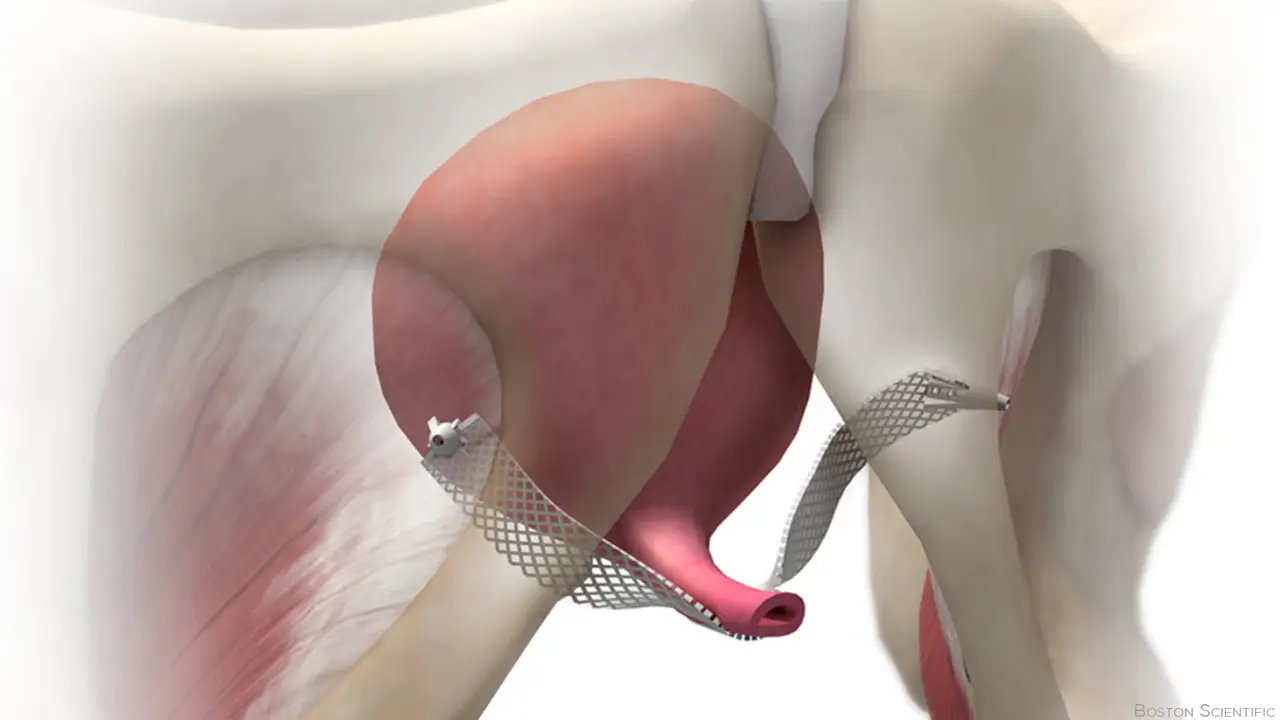
This procedure uses a special tape to physically support and stabilize the descended urethra. No perineal incision means less concern about scarring, the short procedure time can allow same-day discharge and a quick return to daily life.

Mini-sling advantages

Performed without a perineal incision, this procedure is less likely to leave visible scars. The smaller vaginal incision generally means less bleeding and tissue injury and faster recovery. Surgery time is shorter than with conventional methods, and removal is relatively straightforward if needed.

Conventional incontinence treatment vs. mini-sling treatment

Incision area

Anterior vaginal wall + abdomen + thigh
Anterior vaginal wall

Anesthesia

Spinal anesthesia
Local anesthesia, sedation

Scarring / pain

Scarring and pain may be noticeable
Reduced concern about scarring

Surgery time / hospitalization

About 30 minutes · hospitalization may be required
Within 15 minutes · same-day return home possible

Complications

Bladder perforation, voiding dysfunction
Almost none

Mini-sling incontinence surgery may be eligible for insurance claims.

Health insurance

Under the Ministry of Health and Welfare notice effective December 2011, National Health Insurance applies when surgery is determined necessary based on urodynamic testing.

Private insurance

Depending on your policy, private insurance may also cover urinary incontinence surgery costs of up to 5 million KRW.

Clinical Outcome

What's different?

Improving urinary incontinence symptoms changes the quality of daily life.

BEFORE
  • Leakage when coughing or laughing (stress)
  • Difficulty holding in because you are in a hurry to go to the bathroom (urgency)
AFTER
  • Strengthens urethra and bladder support
  • Improvement of urine leakage during daily activities
Types · Medical Check

To me too Do I need treatment?

Select the symptom type that applies to youSelf-check criteriaCheck it out.

Stress urinary incontinence

Approximately of all urinary incontinence80~90%is the most common type. Urine leaks when abdominal pressure rises, such as during coughing, sneezing, or exercise.

❌ Urine leakage when coughing or sneezing
❌ Smiling Swelling when running
❌ Uncomfortable when lifting heavy objects
❌ Symptoms get worse after giving birth

Urge urinary incontinence

A sudden urge to urinate is difficult to hold, and leakage often occurs on the way to the restroom. Nocturia may also occur.

❌ Sudden unbearable thirst
❌ Swelling before going to the bathroom
❌ Waking up several times at night
❌ Just hearing the sound of water makes me feel thirsty

Mixed urinary incontinence

This is a form in which stress and urge incontinence occur together. Precise evaluationto identify the primary contributing factors, then combine treatments.

❌ Coughing + sudden thirst
❌ Symptoms are mixed and difficult to distinguish
❌ Inconvenient in both exercise and daily life
❌ Wearing pads at all times

Overflow urinary incontinence

This type occurs when the bladder does not empty properly and urine overflows and leaks. Identify underlying conditionscomes first.

❌ Difficulty holding urine despite a full bladder
❌ Residual urine sensation or abdominal discomfort after urination
❌ Increased urine volume overnight
❌ History of neurologic or urologic disease

Wondering which treatment and cost are right for your symptoms?

The medical director personally evaluates you in a private one-on-one consultation.

Get a consultation tailored to my symptoms
Surgical Detail

Why choose Trinity Women's Clinic for stress incontinence surgery?

Even with the same mini-sling, differences in outcomesAccuracy of preoperative diagnosis, surgical planning, and recovery careare classified into. Trinity Women's Clinic responsibly plans every step, from surgical suitability through recovery, based on these three factors.

Key Point

Single incision mini sling surgery

Supports the middle part of the urethra to prevent urine leakage during abdominal pressure

Trinity Women's ClinicFour key criteria for stress incontinence surgeryis checked first.

  • 1) Whether my symptoms truly meet the indication for surgery

    With urodynamic testing and ultrasoundStress component · severityis quantified first to determine whether surgery is necessary.

  • 2) Whether the recovery schedule is designed around my daily life

    YourA schedule that considers your return to daily lifeWe guide you through this process and explain a specific return sequence based on work, household tasks, and exercise.

  • 3) How much the burden during and after surgery can be reduced

    Sedation anesthesia · minimal-incision principleto reduce the burden of surgery, while postoperative pain and discomfort are promptly managed in stages.

  • 4) Whether there is an aftercare system that also considers recurrence

    We provide focused care for 1–3 months after surgery. Pelvic floor exercises · abdominal pressure management · regular checkupsare connected to plan through recurrence prevention.

Urodynamic test & 1:1 consultation

All of the above criteria areTest results and consultationwe provide personalized guidance.

4th Gen Mini-Sling

Safe, minimally invasive, without scars
4th generation mini sling urinary incontinence surgery

The key isMinimum vaginal incision without thigh incisionis the approach used to position the sling.

Compare

Conventional incontinence treatment VS mini-sling treatment

Quickly compare only the key points.

Conventional incontinence treatment (TOT)VSFourth-generation mini-sling

Incision area

Anterior vaginal wall + thigh incision

VS

Minimal anterior vaginal wall incision(No thigh incision)

Pain · scarring

Thigh pain and scarring may be noticeable

VS

Small incision reduces concerns about pain and scarring

Recovery · return to daily life

Usually requires a longer rest and recovery period

VS

High likelihood of same-day/short-stay discharge and quick return

Postoperative satisfaction

Results vary greatly by individual, and daily discomfort may remain

VS

Recurrence prevention carewith the expectation of increased satisfaction

※ Medical outcomes vary by individual; decide with a specialist after exam and consultation.

Surgery Indications

Who is eligible for urinary incontinence surgery?
6 applicable

When daily discomfort keeps recurring,
Check the surgery recovery criteria.
01

per day
If you urinate more than 8 times

02

Going to the bathroom while sleeping
If you go more than 2 times

03

When you laugh loudly or sneeze
If urine leaks occasionally

04

Urine during sex
If there is a leak

05

During exercises such as jump rope & jumping
If urine leaks

06

Urinary incontinence treatment
When complete cure is difficult

Our Method

urinary incontinence surgery,
3-step solution

From precise evaluation to tailored surgery and recovery care, Trinity’s systematic process supports recovery without recurrence.
01

Precision diagnosis

Urodynamic testing and pelvic ultrasound quantify incontinence type and severity to determine surgical suitability.

02

Customized sling surgery

Minimally invasive mini-sling surgery supports the middle part of the urethra and blocks urine leakage during abdominal pressure.

03

Recovery & habit correction

After same-day/short-term discharge, recurrence is prevented through pelvic muscle exercises and abdominal pressure management.

Trinity TV

The director will personally explain urinary incontinence

Urinary incontinence surgery description thumbnail
07:20

“When should I get surgery for urinary incontinence?”
Surgery timing and eligibility

We explain the criteria for considering surgery when there is no improvement even with exercise and behavioral therapy.

Sling surgery thumbnail
10:05

Mini-sling surgery, what's different?

Easily explains the characteristics, recovery period, and precautions for each surgical method.

Urinary incontinence review thumbnail
06:40

“I can now live without pads.”
Urinary incontinence surgery review interview

The patient's honest story, from the reason he decided to have surgery to the changes in his daily life.

Real Community Stories

Urinary incontinence surgery
Verified authentic review

These are urinary incontinence surgery reviews left directly by patients.

Review Capture
See details

“I had to wear a pad because every time I coughed it would turn red. After surgery, I stay without pads. “The consultation was easy and I am satisfied with the results.”

- Surgery review written by a female patient in her 40s -

#StressUrinaryIncontinence #Without pad

Review Capture
See details

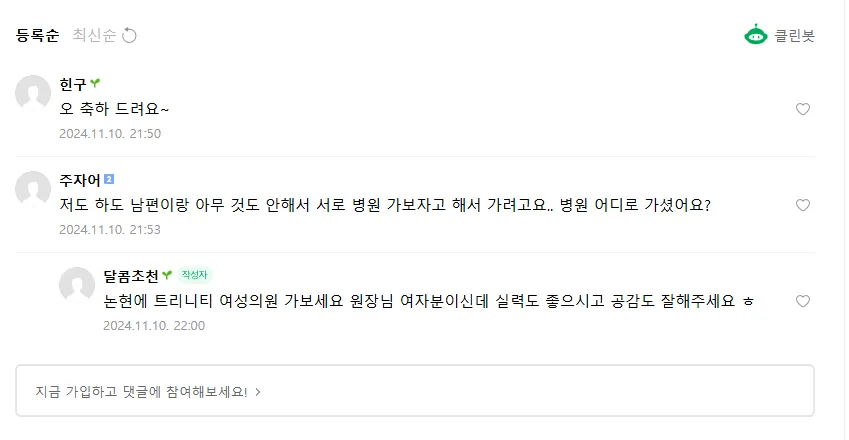
Sinsa Station, Trinity, you know..
Because exercise alone has its limitations,
I had the surgery, and I think it was the right decision.

- Urinary incontinence comment review from a female patient on a moms' community -

#Same-day discharge #Fast recovery
Review Capture
See details

“It’s a female director.Please be easy to talk to and explain well. “I trusted him because he examined me thoroughly before the surgery.”

- Surgery review written by a female patient in her 40s -

#Female Director #Meticulous examination

Medical Staff

"They say there's nothing you can do when you get older, We think differently."

Urinary incontinence commonly follows childbirth and aging, but it does not have to be left untreated. With a precise evaluation we identify the cause and improve symptoms through tailored options such as surgery and behavioral therapy.

Through dedicated incontinence testing and sling surgery, Trinity Women's Clinic aims for recovery that returns you to daily life without recurrence.

With the same woman's heart, we will help you regain your daily confidence.

Dr. Nanhee Jeong & Kiyeol Yang

Trinity Women's Clinic

Systematic treatment process

Step 1

1. Urinary incontinence detailed examination & consultation

Urodynamic testing and pelvic ultrasound confirm type and severity; we explain suitability and the surgical approach.

Step 2

2. Customized sling surgery (same day/short-term discharge)

Mini-sling surgery is done under sedation. After recovery-room rest, most patients go home the same day or shortly after.

Step 3

3. Recovery check & habit correction

At follow-up visits we check wound and function recovery and teach pelvic exercises and pressure management to help prevent recurrence.

Trinity After-Care

"Surgery is not the end."

Provides Trinity's unique care program for recovery and prevention of recurrence.

Pelvic muscle strengthening

Kegel/pelvic floor exercise guide

Abdominal pressure management

Correction of daily habits

Regular inspection

Visits at each stage of recovery

Consultation linkage

Real-time answers to your questions

Frequently Asked Questions

Q. Is urinary incontinence surgery painful? Can I be discharged the same day?
Surgery is done under sedation, so there is no pain during the procedure. Mini-sling is minimally invasive with fast recovery—most patients go home the same day or after one night. Mild discomfort for 2–3 days is usually managed with pain medication.
Q. How long does the recovery period take?
Light daily activity is usually possible within a few days after discharge. Intense exercise, heavy lifting, and intercourse are typically advised after 4–6 weeks, guided by your doctor’s exam.
Q. Can urinary incontinence occur again after surgery?
Long-term success rates for sling surgery are generally high. Aging, further childbirth, or chronic cough can change outcomes over time, so pelvic exercises and pressure management remain important.
Q. Can urge incontinence be treated with surgery?
Urge incontinence is usually tried first with behavioral and medication therapy. In mixed cases with stress incontinence, sling surgery may be combined with drugs/behavior therapy based on tests. We outline a plan after precise evaluation.

Change begins with consultation

Concerned about urinary incontinence,
Get clarity with a consultation now.

Urine leakage when you cough: 'stress urinary incontinence' needs treatment

Urinary incontinence is a condition in which urine leaks involuntarily, causing severe stress in everyday life and social relationships. In particular, when the pelvic floor muscles are weakened by pregnancy, vaginal delivery, aging, or menopause and can no longer adequately support the bladder and urethra, 'stress urinary incontinence'—urine leakage when coughing, sneezing, or laughing loudly—can occur. It rarely resolves on its own and worsens when left untreated, so an accurate diagnosis and surgical treatment by an obstetrics and gynecology specialist experienced in female urologic conditions, such as Trinity Women's Clinic near Sinsa Station in Gangnam, are needed.

'Fourth-generation Mini-Sling' that overcomes the drawbacks of third-generation TOT surgery

1. Minimally invasive surgery without thigh incisions

The widely used third-generation TOT procedure for urinary incontinence passed a tape through the anterior vaginal wall and the inner sides of both thighs. This carried risks of postoperative thigh pain, scarring, and nerve damage. In contrast, Trinity Women's Clinic's fourth-generation Mini-Sling surgery precisely positions a specialized tape beneath the urethra through only a single minimal incision in the anterior vaginal wall, without thigh incisions.

2. Less pain and same-day discharge for a quick return to daily life

Mini-Sling surgery is very brief, taking about 15–30 minutes, with significantly less bleeding and pain. It is performed safely under sedation, and after resting in the recovery room without hospitalization, same-day discharge is possible—allowing busy professionals and homemakers to undergo surgery with confidence.

Health insurance coverage that reduces the cost burden of urinary incontinence surgery

Many people wonder about the cost of urinary incontinence surgery and whether private indemnity insurance applies. Because procedures for urinary incontinence, including Mini-Sling and TOT, treat a medical condition rather than serve a cosmetic purpose, national health insurance coverage may be available following preoperative testing. At Trinity Women's Clinic, we perform the essential preoperative 'Urodynamic Study' directly and precisely on site. If the results meet the diagnostic criteria for stress urinary incontinence, national health insurance and private indemnity insurance claims may be available, substantially reducing the financial burden of surgery.

Frequently Asked Questions (FAQ)

Can vaginal rejuvenation surgery and urinary incontinence surgery be performed together?

Yes, it is possible. If urinary incontinence has developed due to childbirth and aging, vaginal laxity (weakened pelvic muscles) is likely to be present as well. In this case, performing fourth-generation Mini-Sling surgery together with Trinity's triple-restoration vaginal rejuvenation surgery can combine anesthesia and recovery into one period and create a powerful synergistic effect by restoring urethral support and pelvic muscle elasticity at the same time.